Greensboro yards live in a transition zone, a difficult band where summertime heat can torch cool-season yards and winter season frost can stall warm-season ones. If you have actually battled patchy turf, weeds that appear to shrug at herbicides, or soil that behaves like brick, you're not alone. The good news: most recurring issues trace back to a handful of regional conditions that react to the ideal strategy. After years of strolling residential or commercial properties from New Irving Park to Starmount and out toward Pleasant Garden, patterns emerge. Fix the basics, and lawns here can be resistant, thick, and much easier to maintain.
Start with the grass you're growing
Greensboro sits in the Piedmont, which means you can grow tall fescue, Kentucky bluegrass blends, zoysia, or bermuda. Each option comes with trade-offs.
Tall fescue is the workhorse for many Greensboro backyards. It endures shade much better than bermuda, stays green through winter season, and looks lush in spring and fall. Its Achilles' heel is summer season. Long stretches of 90-degree days, specifically with warm nights, stress fescue, opening the door to brown patch and thinning.
Bermuda and zoysia prosper in summertime, knit together a dense mat, and choke out lots of weeds once established. They go brown in winter, which bothers some property owners, and they require more sunshine than the majority of older neighborhoods offer. Bermuda likewise can be aggressive around beds and into next-door neighbors' lawns.
There is no best yard here, only options that match microclimate and maintenance style. A north-facing front lawn with mature oaks? Fescue or a fescue-heavy blend is normally the more secure call. A wide-open backyard with 8 or more hours of sun? Hybrid bermuda or a durable zoysia can be impressive. If you work with a regional landscaping group, ask to reveal you lawns nearby with the exact same exposure and soil; seeing mature examples beats marketing claims.
The soil under your feet matters more than seed or fertilizer bag labels
Piedmont clay gets blamed for everything. Clay isn't the enemy. Compacted clay is. When foot traffic, lawn mower weight, and rain tamp soil particles tight, roots stay shallow, water runs rather of taking in, and the lawn resides on a knife's edge. In a damp week, it suffocates. In a dry week, it wilts.
Most Greensboro yards take advantage of yearly core aeration. Pulling real cores (not just poking holes) opens channels for air and water, lets raw material and topdressing filter down, and provides roots a chance to move deeper. Time it to assist your turf type: succumb to fescue, late spring into early summer for bermuda and zoysia. I have actually seen fescue yards transform from spongy and disease-prone to thick and tough within 2 fall cycles of aeration coupled with correct seeding and pH correction.
pH might be the quietest factor yards struggle here. Lots of soil tests around Greensboro come back on the acidic side, typically 5.2 to 6.0. Most turf wants roughly 6.2 to 6.8. Listed below that, nutrients currently in the soil get secured, and you can throw down all the fertilizer you want with frustrating outcomes. A simple soil test, through NC State Extension or a respectable laboratory, guides lime applications so you're not thinking. Plan on re-testing every 2 to 3 years, considering that pH drifts with rainfall and fertilization patterns.
Organic matter assists clay behave. Topdressing with a thin layer of garden compost after aeration, approximately a quarter inch, yields long-lasting advantages. It enhances structure, enhances microbial life, and gently feeds grass. Done each year for two or 3 seasons, it alters how a lawn holds water and resists tension. It's not instantaneous, however it's long lasting, and it pairs well with regular landscaping in Greensboro, NC where fall yard work dovetails with leaf management.
Water: just how much, when, and why your timing is probably off
Greensboro's rains is generous on paper, frequently 40 to 50 inches a year, yet yards still dry in July and August. The circulation is uneven, and summertime thunderstorms run off compacted soil quickly. The objective is deep, irregular watering, not daily spritzing.
For cool-season fescue, one inch each week in spring and fall is a great baseline, approaching to 1 to 1.5 inches throughout summer heat if you are dedicated to keeping it actively growing. If you prefer to let fescue go semi-dormant in peak heat, water just enough to avoid serious wilt, then resume strong watering as nights cool in late August. For warm-season lawns, many established bermuda and zoysia want about an inch each week through summer but can deal with brief dry spells.
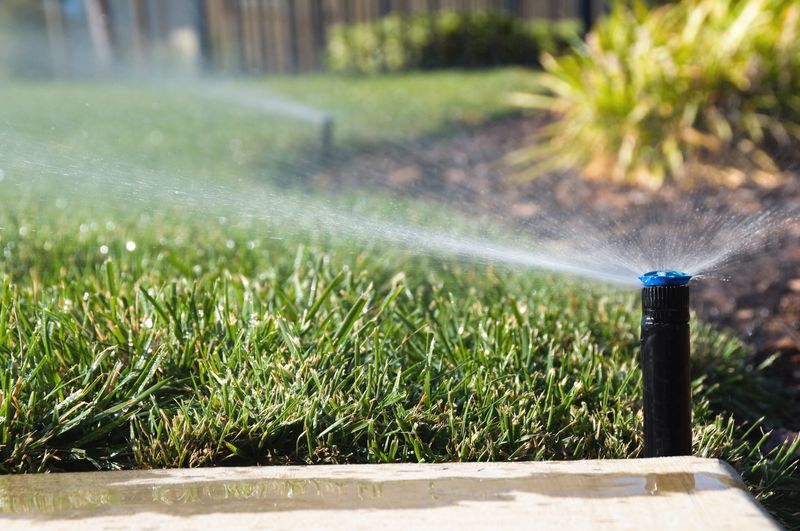
Irrigate early in the early morning, finishing by dawn if possible. Evening watering keeps leaves wet over night and feeds fungal illness. Inspect your system's output with a few tuna cans or rain assesses positioned around the lawn, then run the zone long enough to strike your target. I frequently see systems set at 10 or 15 minutes, which barely moistens the surface area in clay. It's better to water less days at longer periods so moisture reaches 4 to 6 inches deep.
Slope complicates things. Baseball-diamond water on a hillside simply goes to the curb. Cycle-soak scheduling helps: break a long term into two or 3 much shorter cycles with 30 to 60 minutes between, so water takes in instead of sheeting off.
The summertime disease duet: brown spot and dollar spot
Fescue's nemesis in Greensboro is brown spot, which flourishes when nighttime temperatures sit above 68 to 70 degrees with humidity. You get circular or irregular tan patches, frequently with a darker ring at the edge in the morning when dew coats the leaves. If you tug on affected blades, they slip out easily, leaving a slimy sheath near the crown.
Cultural defenses matter. Water at dawn, not in the evening. Prevent heavy nitrogen during warm, damp stretches. Trim at the high end of the range, around 3.5 to 4 inches for tall fescue, and keep blades sharp so cuts recover quickly. Reduce thatch if it's thicker than a half inch.
Still, some summer seasons line up against you. Preventative fungicide rotation, beginning in late May or early June and advancing label intervals through July, can conserve a lawn that has a history of brown patch. Rotate modes of action to avoid resistance. House owners frequently wait till damage is visible and after that apply when, which tampers down the break out but doesn't safeguard new development. A Greensboro yard care schedule that anticipates the humid nights makes the difference.
Dollar area shows up on both cool and warm-season lawns, with small straw-colored spots that combine into larger patches. You'll sometimes see hourglass-shaped lesions on private blades. Again, lean on well balanced fertility, the right mowing height, and morning irrigation. If fungicides are needed, pick items identified for dollar spot and rotate as directed.
Weeds that keep appearing and what your yard is telling you
If you consistently combat the same weeds, they're identifying your conditions.
Henbit and chickweed burst in late winter season and early spring, thriving in thin grass and moisture-retentive soil. They seed out quickly. Pre-emergent herbicides in early fall can obstruct their development, but the timing must be crisp, and you require constant protection. Overseeding fescue in the exact same window complicates this, considering that most pre-emergents likewise block lawn seed. That's why lots of Greensboro house owners pick one year for heavy fall overseeding and skip pre-emergent, then the next year lean harder into weed avoidance with minimal seeding. You can't totally have it both ways without splitting locations or utilizing products that are friendlier to seeding, which have trade-offs.
Crabgrass enjoys heat and bare soil. Once it's up and tillered, post-emergent control ends up being a yank of war. The best play is a well-timed pre-emergent in early spring, frequently around when forsythia flower or soil temperatures hit the mid-50s for numerous days. On greatly trafficked edges by pathways and driveways, enhance the barrier with a second pre-emergent hand down the label interval.
Wild violets are a signature Piedmont headache. They slip into partial shade beds and then sneak into yard edges. They're waxy and shrug at many herbicides. Multiple fall applications of items labeled for violets, spaced about thirty days apart, are typically needed. Good protection with a surfactant helps, and patience is essential. Where violets are thick under https://www.ramirezlandl.com/contact trees, consider adjusting the plan: develop mulched beds where turf won't truly prosper, then keep the border tight.
Nutsedge likes badly drained pipes locations and irrigation leaks. It has an unique, glossy look and grows faster than surrounding grass. Hand-pulling frequently leaves roots behind, so you get a quick rebound. Spot-spray with a sedge-labeled herbicide and address drain or sprinkler overspray that keeps the location soggy.
Mowing options that either develop strength or suffice down
Most yards in Greensboro are cut too brief. Short cuts increase heat tension and let sunlight reach weed seeds. For tall fescue, set the mower between 3.5 and 4 inches through spring and fall, then, if illness pressure rises in summertime, you can hold that height or drop slightly to reduce canopy humidity. For bermuda, a regular, lower cut yields the best texture, however consistency is the key. Trim typically adequate that you never get rid of more than a third of the blade in a pass. If you let bermuda jump and after that scalp it back, you'll brown it and expose stems.
Keep blades sharp. A dull blade shreds leaves, turning suggestions white and increasing moisture loss. On a normal domestic schedule, sharpening every 20 to 25 mowing hours keeps cuts tidy. If you observe torn suggestions, it's time.
Grasscycling, letting clippings fall, returns nitrogen and wetness. In Greensboro's humidity, some homeowners worry about thatch. Real thatch originates from stems and roots building up faster than they disintegrate, not clippings. If you preserve appropriate fertility and mow often, clippings vanish into the canopy and assistance rather than hurt.
Bare areas, thin shade, and what to do under trees
Under mature oaks and maples, thin turf reflects an easy truth: even shade-tolerant lawns need light, water, and area. Tree roots contend for all 3. You can trim the canopy to let in more morning sun, but beware with aggressive root cutting or heavy soil fill around trunks. Trees typically lose that fight.
For fescue, fall overseeding into thinned locations is effective if you prepare the soil. Rake or power rake to open the surface area, slit seed where possible, and keep the seedbed consistently damp for 2 to 3 weeks. Expect a higher failure rate under genuine shade, and over-seed much heavier there. In deeply shaded spots that never ever fill despite your best shots, change to mulch or groundcovers. It's honest landscaping that looks much better year-round than a consistent spot of below average grass.
For warm-season yards pressing into tree shadow, zoysia tolerates filtered light better than bermuda. Even so, 4 to five hours of excellent light is a sensible minimum. If you dip below that, turf thins. Extending bed lines to match where grass can really flourish cleans the appearance and reduces weekly frustration.
Grubs, moles, and other sub-surface mischief
Every lawn has insects. Couple of reach levels that validate broad treatment. White grubs, the larvae of beetles, chew roots and cause spongy turf that lifts like a carpet. The tell is irregular spots that yellow in late summer and early fall, typically where skunks or raccoons begin digging for a snack. Before treating, peel back a square foot of grass and count. Rough limits are around 5 to 10 grubs per square foot for action, depending upon species.
Preventative treatments decrease in late spring to early summer season as eggs hatch, while alleviative products work later however are less efficient. Time and product choice matter. If you overuse broad-spectrum insecticides, you risk civilian casualties to beneficials and your soil's ecology.
Moles do not consume roots; they eat grubs and earthworms. If you get rid of grubs and still have moles, it's due to the fact that worms stay, which you really want. In that case, trapping is the sensible service. Repellents can press moles briefly, but they typically return or shift to a neighbor and after that back. When I see substantial runs, I pair a limited grub strategy if counts validate it with targeted trapping on active tunnels.
The restoration window that Greensboro gives you for fescue
If you grow high fescue, circle mid-September on your calendar. Night temperatures drop, daytime heat reduces, and soil is still warm sufficient to drive root development. That four to 6 week window is the most effective time to reconstruct a thin lawn.
A tight series works best. Scalp gently to expose soil, core aerate to pull plugs, then overseed with a premium turf-type high fescue mix. I choose three cultivars for hereditary diversity. Broadcast 4 to 6 pounds per 1,000 square feet in bare areas and 2 to 3 pounds in thicker sections. Drag a mat to break up cores and cover seed, then topdress gently with compost if the budget plan enables. Keep the top quarter inch of soil moist, not soaked, for the very first two weeks. As seedlings stand, withdraw to deeper, less regular watering.
Avoid heavy nitrogen at seeding. Starter fertilizer with phosphorus, if your soil test calls for it, supports rooting. If phosphorus levels are already adequate, skip it. Come late October, feed with a modest nitrogen dose. In winter, a light application on a warmer spell can help, then hit a spring feeding as development resumes. Resist the desire to push rich spring growth with heavy nitrogen; you'll spend for it with more disease in June.
Warm-season facility and the persistence it requires
Bermuda and zoysia wish to be planted when soil temperature levels warm, and they spread out laterally. Sod provides you an immediate surface and quick control in areas susceptible to erosion or foot traffic. Sprigs and plugs are less expensive but require patience and diligent weed control while they fill. Seeding bermuda is practical with particular ranges, however seeded and sodded types may differ in color and texture, so match your technique to your long-lasting plan.
Pre-emergent timing is essential. If you prepare to seed bermuda, you can not blanket the area with basic spring pre-emergents or you'll obstruct your own turf. Many property owners in Greensboro choose sod to bypass that dispute, then utilize pre-emergents in subsequent seasons as the lawn matures.
Mowing low and frequently from the start assists bermuda and zoysia branch and thicken. If you let them grow high and then cut back hard, you scalp and stress the plant. A reel lawn mower produces a sleek cut at low heights. A sharp rotary lawn mower can do fine at a somewhat higher setting if you mow frequently.
Drainage, thatch, and why some areas never ever dry or never remain moist
Yards that were graded decades back and constructed on Piedmont clay naturally establish wet pockets. Downspouts that dispose near foundation beds, patios that tilt the wrong way, or soil that settled contribute to the issue. Yard roots suffocate in these zones, and weeds that love damp feet take over.
French drains pipes, dry wells, and simple downspout extensions are unglamorous repairs that work. Where water streams throughout a yard, a shallow swale can move it without looking like a ditch, specifically as soon as the grass knits. In narrow side lawns that remain damp, consider a stone course or mulch corridor rather of requiring yard to do a task it's not eliminated for.
Thatch thicker than a half inch hampers water and nutrients. Warm-season lawns with aggressive stolons can build thatch if fertilized greatly and cut infrequently. Dethatching or verticutting in the suitable season, followed by topdressing, resets the profile. For fescue, true thatch problems are less typical here, and what many people call thatch is frequently simply compressed soil. Remedy the soil before you attack the surface.
Fertility: not too much, not insufficient, and timing that respects the calendar
A lawn is a living system. Feed it in sync with its growth. Fescue responds best to fall feeding, when roots develop. Split 2 or three modest applications from September through November. A light winter feeding throughout a thaw can help, and a restrained spring shot supports healing. Stacking nitrogen on late spring development makes a lavish buffet for brown patch.
Warm-season yards want the majority of their fertilizer from late spring through mid-summer. Start after green-up is total and the danger of a cold snap has actually passed, then taper as nights begin to cool. Too late and you encourage tender growth that has a hard time when autumn arrives.
Micronutrients matter if your soil test calls for them, however don't chase after glossy labels. Greensboro soil often requires pH correction initially, well balanced nitrogen second, then phosphorus and potassium as test results determine. Slow-release nitrogen sources assist avoid flushes that outmatch root support.
When to contact help and what to ask for
You can handle much of this yourself with a standard spreader, a sharp lawn mower, and a neighborly eye on the weather condition. But if time is tight, or your lawn has a number of interacting issues, a local team that knows the Greensboro rhythm can shorten the knowing curve. When you evaluate landscaping in Greensboro, NC, ask pointed questions.
Ask how they time pre-emergents around fescue seeding, whether they rotate fungicide modes of action in humid summertimes, and if they propose a soil test before recommending lime. Request for examples of yards with your light conditions and lawn type. Clarify whether irrigation audit and head changes become part of the service or an add-on. The ideal partner fixes origin, not just symptoms.
Two basic regimens that raise most Greensboro lawns
- Weekly five-minute walk: morning, coffee in hand. Try to find brand-new weeds, wilting patches, watering overspray, mower rutting near turns, and any area where color shifts. Capturing little problems avoids big ones. Seasonal anchor dates: mid-March for spring pre-emergent if you're not seeding warm-season grass, mid- to late-May to reassess watering as nights warm, mid-September for fescue remodelling, and late October for fall feeding. Put them on your calendar and commit.
Edge cases and truthful expectations
Not every lawn will be a postcard. North-facing slopes under evergreens will constantly check fescue. Public-facing strips by hot asphalt and concrete heat up and dry out faster than your backyard. Lawns with heavy family pet traffic suffer compaction and urine burn; training patterns and small hardscape additions can protect the remainder of the turf.
If you travel for weeks in summer season, pick a turf and schedule that can coast, or install a trusted, dialed-in irrigation controller. If you choose low inputs, accept a couple of weeds and aim for healthy density rather than magazine excellence. A lawn that fits your life will always look better than one that combats it.
Pulling it together
Greensboro's lawn problems aren't strange. They're foreseeable outcomes of soil that compacts easily, summertimes that test cool-season grass, and management choices that intensify small mistakes. Match your turf to your light and way of life. Open the soil, remedy the pH, and water deep at dawn. Trim at the ideal height with sharp blades. Anticipate illness before it erupts, and time seed or pre-emergent, not both on the very same square at the very same time. Fix drainage where water sticks around and reroute high-traffic or deeply shaded zones into planting beds or paths.
Do these consistently and your yard will stop lurching from crisis to crisis. It will approach a consistent state that you can maintain with modest effort. That's the target for any effective yard program and the requirement that great landscaping in Greensboro, NC ought to intend to deliver.
Business Name: Ramirez Landscaping & Lighting LLC
Address: Greensboro, NC
Phone: (336) 900-2727
Website: https://www.ramirezlandl.com/
Email: [email protected]
Hours:
Sunday: Closed
Monday: 8:00 AM–5:00 PM
Tuesday: 8:00 AM–5:00 PM
Wednesday: 8:00 AM–5:00 PM
Thursday: 8:00 AM–5:00 PM
Friday: 8:00 AM–5:00 PM
Saturday: 8:00 AM–5:00 PM
Google Maps: https://www.google.com/maps/search/?api=1&query=Google&query_place_id=ChIJ1weFau0bU4gRWAp8MF_OMCQ
Map Embed (iframe):
Social Profiles:
Facebook
Instagram
Major Listings:
Localo Profile
BBB
Angi
HomeAdvisor
BuildZoom
Ramirez Landscaping & Lighting is a Greensboro, North Carolina landscaping company providing design, installation, and ongoing property care for homes and businesses across the Triad.
Ramirez Landscaping & Lighting offers hardscapes like patios, walkways, retaining walls, and outdoor kitchens to create usable outdoor living space in Greensboro NC and nearby communities.
Ramirez Landscaping & Lighting provides irrigation services including sprinkler installation, repairs, and maintenance to support healthier landscapes and improved water efficiency.
Ramirez Landscaping & Lighting specializes in landscape lighting installation and design to improve curb appeal, safety, and nighttime visibility around your property.
Ramirez Landscaping & Lighting serves Greensboro, Oak Ridge, High Point, Brown Summit, Winston Salem, Stokesdale, Summerfield, Jamestown, and Burlington for landscaping projects of many sizes.
Ramirez Landscaping & Lighting can be reached at (336) 900-2727 for estimates and scheduling, and additional details are available via Google Maps.
Ramirez Landscaping & Lighting supports clients with seasonal services like yard cleanups, mulch, sod installation, lawn care, drainage solutions, and artificial turf to keep landscapes looking their best year-round.
Ramirez Landscaping & Lighting is based at 2700 Wildwood Dr, Greensboro, NC 27407-3648 and can be contacted at [email protected] for quotes and questions.
Popular Questions About Ramirez Landscaping & Lighting
What services does Ramirez Landscaping & Lighting provide in Greensboro?
Ramirez Landscaping & Lighting provides landscaping design, installation, and maintenance, plus hardscapes, irrigation services, and landscape lighting for residential and commercial properties in the Greensboro area.
Do you offer free estimates for landscaping projects?
Ramirez Landscaping & Lighting notes that free, no-obligation estimates are available, typically starting with an on-site visit to understand goals, measurements, and scope.
Which Triad areas do you serve besides Greensboro?
Ramirez Landscaping & Lighting serves Greensboro and surrounding Triad communities such as Oak Ridge, High Point, Brown Summit, Winston Salem, Stokesdale, Summerfield, Jamestown, and Burlington.
Can you help with drainage and grading problems in local clay soil?
Yes. Ramirez Landscaping & Lighting highlights solutions that may address common Greensboro-area issues like drainage, compacted soil, and erosion, often pairing grading with landscape and hardscape planning.
Do you install patios, walkways, retaining walls, and other hardscapes?
Ramirez Landscaping & Lighting offers hardscape services that commonly include patios, walkways, retaining walls, steps, and other outdoor living features based on the property’s layout and goals.
Do you handle irrigation installation and repairs?
Ramirez Landscaping & Lighting offers irrigation services that may include sprinkler or drip systems, repairs, and maintenance to help keep landscapes healthier and reduce waste.
What are your business hours?
Ramirez Landscaping & Lighting lists hours as Monday through Saturday from 8:00 AM to 5:00 PM, and closed on Sunday. For holiday or weather-related changes, it’s best to call first.
How do I contact Ramirez Landscaping & Lighting for a quote?
Call (336) 900-2727 or email [email protected]. Website: https://www.ramirezlandl.com/.
Social: Facebook and Instagram.
Ramirez Lighting & Landscaping proudly serves the Greensboro, NC area and provides quality landscape design services for residential and commercial properties.
If you're looking for landscaping in Greensboro, NC, call Ramirez Landscaping & Lighting near Greensboro Arboretum.